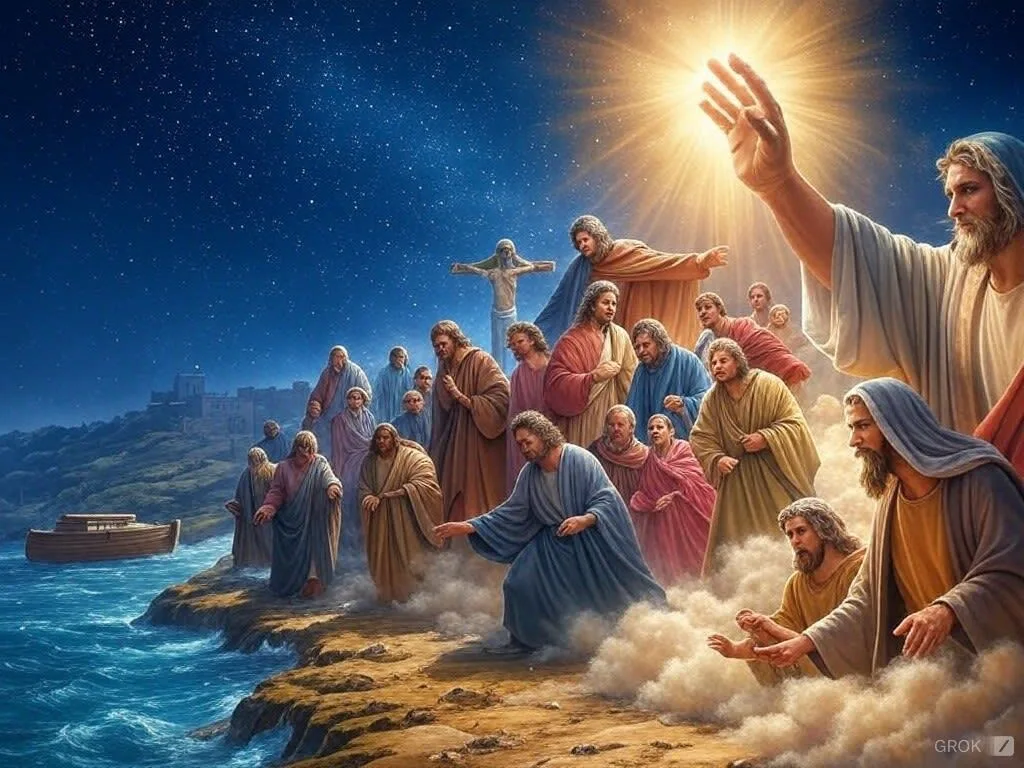
Understanding what Bible topics are most essential will help you know where to begin to navigate the 66 books of the Bible. Each Bible topic is important, but some are found from beginning to end. The interwoven narratives in the Bible reveal profound truths about human nature and divine purpose. Key figures such as Moses, David, and Paul exemplify the complexities of faith and leadership throughout history.
Additionally, the teachings of Jesus provide a radical perspective on love, compassion, and forgiveness that continues to resonate today. Engaging with Scripture through study and reflection invites deeper insights into personal and communal spirituality. Ultimately, the Bible serves as a guide for moral living and understanding one’s place within the larger narrative of existence.
This guide provides a comprehensive, scholarly analysis of the ten foundational pillars of biblical scholarship. Whether you are a student of theology or a new believer, these topics provide the framework for understanding God’s redemptive plan for humanity.
- Creation and the Nature of God
- The Fall of Man and Origin of Sin
- Biblical Covenants and Progressive Revelation
- Prophecy and Fulfillment
- Salvation and Redemption
- Miracles and Divine Intervention
- Faith and Works
- Love and Relationships
- Wisdom
- The End Times and Eschatology
1. Creation and the Nature of God
The biblical narrative begins with the Cosmogony (origin of the universe) in Genesis, establishing God’s supreme authority. This topic focuses on Theology Proper—the study of God’s nature and attributes.
Scholar’s Note: The Son in the Beginning
The creation narrative in Genesis 1 mentions God (Elohim) and the Holy Spirit (Ruach). However, scholarship often points to Jesus being “hidden” in the root of the very first word: בְּרֵאשִׁית (Bereshit). In Aramaic, the first three letters—בְּרֵ (Bar)—translate to “Son.” This linguistic nuance reinforces the New Testament revelation in John 1 that God the Son was present and active at the moment of creation.
Divine Attributes: Scripture reveals a God who is:
- Omnipotent (all-powerful)
- Omniscient (all-knowing)
- Immutable (unchanging).
Ex Nihilo: A key scholarly distinction is that God created the heavens and the earth ex nihilo (creation out of nothing), demonstrating His total independence from the material world—a concept known as Divine Aseity.
For the student of scholarship, this narrative is not merely historical; it establishes the Creator-Creature distinction, which is the starting point for all biblical interpretation.
Explore our expanded analysis of cosmogony and the doctrine of Creation in the Bible.
2. The Fall of Man and Origin of Sin
Following the perfection of Creation, the Bible presents the “Fall”—the historical account of humanity’s rebellion against divine authority. This is the foundational explanation for Theodicy (the defense of God’s goodness in a world of evil).
- Hamartiology: This branch of theology, known as Hamartiology (the study of sin), explains how Adam’s disobedience resulted in Original Sin—a fractured nature that affected all of humanity.
- The Fractured Fellowship: The Fall accounts for the brokenness of the “Imago Dei” (Image of God) within man, creating an immediate and universal need for a Savior.
Understanding the Fall is critical; without a deep grasp of human depravity, the glory of the coming Redemption cannot be fully appreciated.
Find out how everything changed at the fall of man.
3. Biblical Covenants and Progressive Revelation

The Bible is structured by a series of Covenants—solemn, binding legal agreements between God and His people. These represent Progressive Revelation, where God’s plan of redemption is revealed in stages throughout history.
- The Major Covenants: From the Noahic (preservation) and Abrahamic (promise) to the Mosaic (law) and Davidic (kingdom), each agreement points toward a final fulfillment.
- The New Covenant: The narrative culminates in the New Covenant (Jeremiah 31), established through Jesus Christ, which transitions the focus from external law to internal transformation by the Holy Spirit.
Explore the fundamental importance of covenants in the Bible.
4. Prophecy and Fulfillment
Biblical Prophecy is the divine declaration of God’s sovereign will throughout history. It is not merely “prediction,” but a demonstration of Providencialism (God’s purposeful guidance of the universe).
- Messianic Fulfillment: A primary focus of biblical scholarship is Messianic Prophecy—the hundreds of Old Testament “shadows” that find their “substance” in the person and work of Jesus Christ.
- Validation of Canon: The precise fulfillment of prophecies—such as the birthplace of the Messiah in Micah 5:2—serves as a primary internal evidence for the Inerrancy (the belief that the Bible is without error) of the Scriptures.
For the scholar, studying prophecy reveals the Teleology (design and purpose) of history, proving that the Bible is a unified narrative from Genesis to Revelation.
Do you know every prophecy in the Bible?
5. Salvation and Redemption
Salvation is the central theme of the biblical narrative, answering the universal problem of sin. In formal theology, this study is known as Soteriology.
- The Substitutionary Atonement: Biblical redemption is centered on the Substitutionary Atonement of Jesus Christ—the act of Jesus taking the penalty for human sin upon Himself to satisfy divine justice.
- The Tenses of Salvation: A scholarly view of salvation involves three distinct stages: Justification (our legal standing before God), Sanctification (our ongoing growth in holiness), and Glorification (our future perfection in eternity).
Salvation is a monergistic work of grace (the belief that God alone performs the work of salvation) received through faith, providing a “Great Exchange” where Christ’s righteousness is imputed to the believer.
View a complete look at salvation in the Bible.
6. Miracles and Divine Intervention

In the Bible, Miracles are supernatural interventions in the natural order that serve as Supernatural Attestation—signs that validate the message and authority of God’s messengers.
- The Function of Signs: Miracles are never “parlor tricks”; they are purposeful acts that reveal the Immanence of God (God’s presence and activity within the world). From the Exodus to the Resurrection, miracles confirm that God is not bound by the “Laws of Nature” He created.
- The Resurrection: The pinnacle of biblical miracles is the Resurrection of Jesus Christ, which serves as the historical and theological foundation of the entire Christian faith (1 Corinthians 15:14).
Understanding miracles helps the student of the Bible distinguish between General Providence (God’s normal way of working) and Special Providence (God’s direct, miraculous intervention).
Get a look at the whole picture of miracles in the Bible.
7. Faith and Works
The relationship between faith and works is a central study in Christian Ethics and Soteriology. While seemingly in tension, the New Testament presents a unified view of Orthodoxy (right belief) and Orthopraxy (right action).
- Sola Fide: Scholarly theology upholds Sola Fide (faith alone) as the instrument of justification, as taught in Ephesians 2:8-9. We are saved by grace through faith, not by human merit or legalistic “works.”
- The Evidence of Fruit: However, the book of James emphasizes that a “Living Faith” inevitably produces “Good Works.” These are the Evidentiary Fruits of a transformed heart.
For the student of the Bible, works are not the cause of salvation, but the consequence of it. A true, saving faith is never static; it is an active participation in the Missio Dei (the mission of God).
Explore our comprehensive look into the faith and works ultimate guide.
8. Love and Relationships
The Bible is a narrative of Relational Theology, rooted in the character of God Himself. Scripture defines love not as a fleeting emotion, but as a Covenantal Commitment.
- Hesed and Agápe: In the Old Testament, God’s love is defined as Hesed (steadfast, loyal, covenant love). In the New Testament, this culminates in Agápe—a sacrificial, unconditional love modeled by Christ on the cross (1 John 4:8).
- The Imago Dei in Community: Human relationships—marriage, family, and the church—are designed to reflect the Trinitarian Nature of God. We are called to love others as a reflection of the Imago Dei (the Image of God) within every human being.
Understanding biblical love provides the ethical framework for all human interaction, moving beyond sentimentality into a high-level commitment to the flourishing of others.
The answer to the question, what does the Bible say about love.
9. Wisdom
Biblical Wisdom is the practical application of divine truth to human experience. This is primarily found in the Sapiential Literature (the “Wisdom Books”) of the Bible, such as Proverbs, Ecclesiastes, and Job.
- The Fear of the Lord: The starting point of all scholarship is the “Fear of the Lord,” which is a Profound Reverence for God’s holiness and authority.
- Skillful Living: Wisdom is not merely intellectual capacity; it is the “skill” of living in alignment with the Moral Order of the universe. It provides the discernment necessary to navigate the complexities of suffering, justice, and human folly.
Enjoy this deeper look into wisdom in the Bible.
10. The End Times and Eschatology

Eschatology is the study of the “Last Things”—the conclusion of human history and the final fulfillment of God’s redemptive plan. It addresses the Teleology (the ultimate end or purpose) of the world.
- The Consummation of All Things: Biblical eschatology focuses on the Second Coming of Christ, the final judgment, and the creation of the New Heavens and the New Earth (Revelation 21).
- The Hope of Restoration: Far from being a source of fear, scholarly eschatology provides Ultimate Hope, affirming that God will move history toward a just and glorious restoration where sin and death are finally eradicated.
Whether studying Premillennialism, Amillennialism, or Postmillennialism, the core of eschatology remains the same: the sovereign victory of God over the powers of darkness.
Get more information about the end times and eschatology.
Conclusion
These ten essential Bible topics form the structural framework of Systematic Theology. They are not isolated subjects but an integrated narrative of Divine Revelation, tracing the path from the Protology (the study of first things) in Genesis to the Eschatology (the study of last things) in Revelation.
By engaging with these foundational pillars, the student of the Bible moves beyond surface-level reading into a deep, life-changing education. Whether you are exploring the legal standing of Justification or the historical fulfillment of Messianic Prophecy, each topic reveals the unchanging character of God and His meticulous plan for human redemption.
This guide is your starting point for a lifelong pursuit of truth. We invite you to explore our comprehensive deep-dives into each subject to strengthen your faith and refine your biblical scholarship.
For more information about how God designed the Bible as a unified message to us watch this video below by Chuck Missler. He explains how the Bible must be true and can only be from God.
For further exploration into the integrated nature of the Word, view the research archives at Koinonia House.