
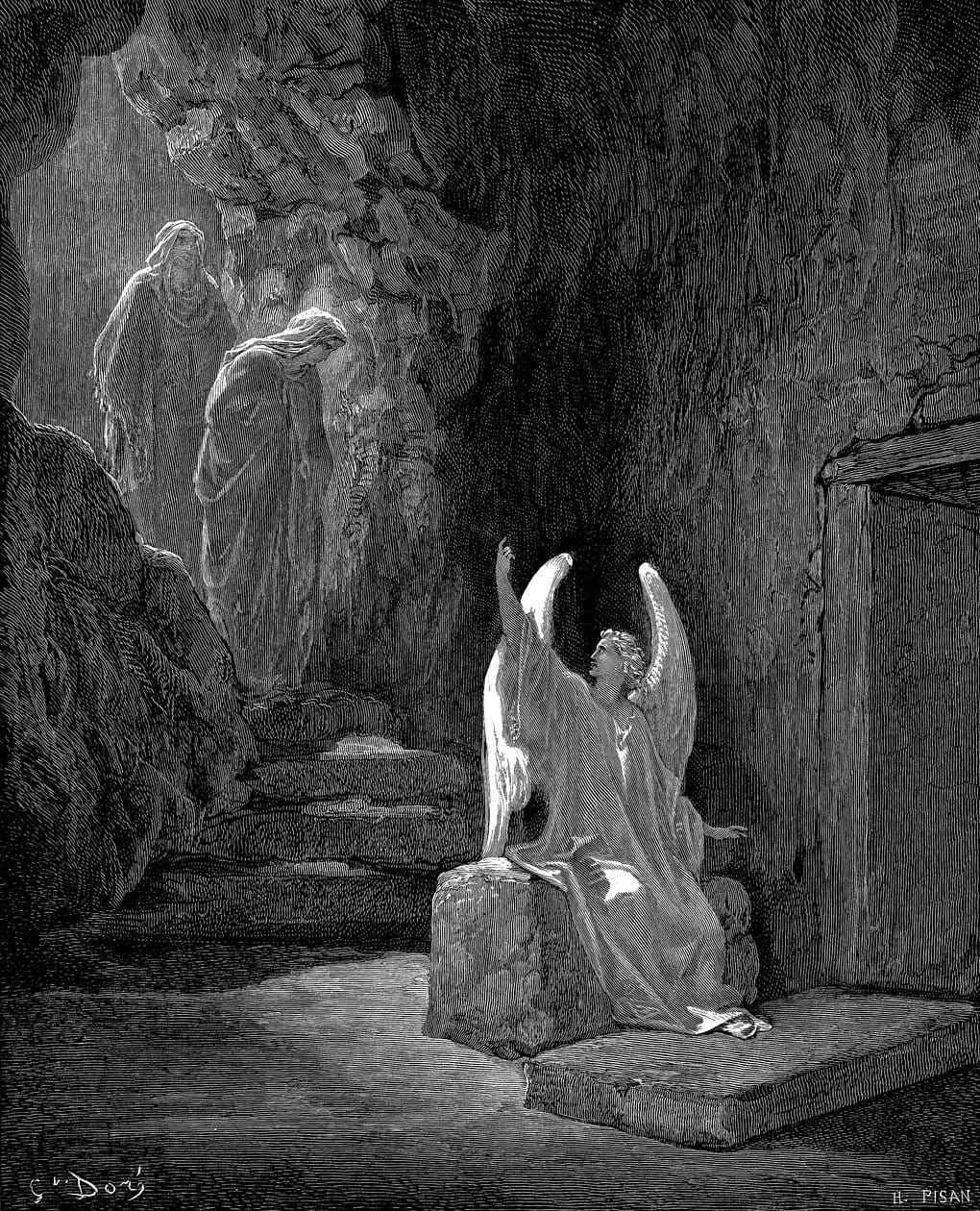
Salvation in the Bible is the authoritative divine act of delivering humanity from the catastrophic spiritual, moral, and eternal consequences of sin through the redemptive substitutionary work of Jesus Christ. In academic theology, this specific arena of study is designated as soteriology (the systematic analysis of the doctrines of salvation).
As a core pillar of biblical theology, salvation is not presented as a static, singular event, but as a comprehensive, dynamic “Rescue Plan” that spans a believer’s past, present, and future. It encompasses Justification (our immediate legal standing), Sanctification (our ongoing spiritual transformation), and Glorification (our ultimate eternal state). As Psalm 27:1 declares, “The Lord is my light and my salvation—whom shall I fear?” By examining the scriptural text through a non-deterministic lens, we can chart the systematic mechanics of how God’s grace interacts with human freedom.
Old Testament Foreshadowing: Physical Rescue and Covenantal Fidelity
While the New Testament provides the explicit structural mechanics of soteriology, the foundational patterns of salvation are deeply rooted in the historical narratives of the Old Testament. In Hebrew scholarship, salvation is rarely discussed as an abstract, disembodied escape from reality; it is consistently illustrated through concrete, historical acts of physical rescue that demonstrate God’s unshakeable covenantal fidelity.
The two primary historical events that pattern biblical salvation are:
- The Exodus Narrative: The deliverance of Israel from Egyptian bondage stands as the supreme Old Testament archetype of redemption. God did not rescue Israel because of their intrinsic national merit or legalistic works; He intervened out of His sovereign, proactive love and historical covenantal promises. The pattern is clear: God first delivers the people from slavery by unmediated grace, brings them through the waters into a spacious land, and then invites them into a conditional, relational covenant at Sinai where they must volitionally choose to walk in obedience.
- The Babylonian Return: The post-exilic restoration of Israel from Babylon mirrors this same soteriological sequence. Confinement and exile are the natural consequences of broken relationships and corrupted human choices. Yet, God’s capacity to restore is never exhausted. His grace opens a path through the wilderness, liberating the captive soul (nephesh) and leading His people back into an environment of wholeness and peace (shalom). These historical physical rescues verify that salvation has always been a holistic process designed to restore human agency for active service in the material world.
The Three Tenses of Salvation
To construct a robust academic framework, a student must categorize salvation into its three distinct biblical tenses. This structural division prevents the error of confusing legal position with moral condition:
| Stage & Theological Term | Direct Focus of Deliverance | Temporal Nature | Scriptural Foundation |
| Stage 1: Justification | Freedom from the Penalty of Sin | Past / Immediate | “By grace you have been saved through faith…” (Ephesians 2:8) |
| Stage 2: Sanctification | Freedom from the Power of Sin | Present / Ongoing | “Work out your own salvation with fear and trembling…” (Philippians 2:12) |
| Stage 3: Glorification | Freedom from the Presence of Sin | Future / Eternal | “We shall be saved from the wrath of God through Him…” (Romans 5:9) |
The Etymology of Grace: Key New Testament Vocabulary
To accurately trace the mechanics of salvation in the Bible, we must evaluate the precise vocabulary deployed by the New Testament authors. Their specific terms establish a clear, non-deterministic pattern of divine initiation and human response:
- Sōzō (σωζω): The primary New Testament verb meaning “to save,” “to rescue,” or “to deliver.” While contemporary usage often restricts this to a future escape from hell, sōzō carries a comprehensive connotation of being made “whole,” “healed,” or “preserved from imminent peril.” It implies a holistic restoration of the human actor.
- Charis (χαρις): Translated as “Grace,” charis historically refers to a generous favor extended without any expectation of return or merit. Within our Provisionist framework, we highlight that this charis is universally prevenient—it is extended to all mankind (Titus 2:11), restoring the fundamental human capacity to respond to the divine call without overriding the will.
- Metanoia (μετανοια): Translated as “Repentance,” this term literally denotes a radical “change of mind” that shifts the direction of the will. This underscores that salvation requires a cognitive and volitional pivot. It is not an arbitrary choice forced upon an individual, but a purposeful turn away from self-governance and toward the absolute Lordship of Jesus Christ.
Soteriological Inquiries: Navigating Debated Topics
A rigorous theological analysis requires addressing the key systemic questions where different interpretive traditions offer divergent views. These inquiries establish how salvation correlates with human responsibility:
1. Baptism vs. Outward Sign
The structural relationship between the “outward sign” of water and the “inward reality” of grace is a historical point of debate. While certain traditions argue for Baptismal Regeneration based on an isolated reading of Acts 2:38, standard non-deterministic scholarship views water baptism as an Ordinance of Identification. It is the public seal and covenantal declaration of a salvation already received by faith alone—functioning as the outward “pledge of a good conscience toward God” (1 Peter 3:21).
2. The Preservation of the Believer
This inquiry centers on the assurance and security of the saint. While the text provides absolute promises that no external force can tear a believer from God’s hand (John 10:28), it also contains severe warnings against voluntary apostasy and shipwrecks of faith (Hebrews 6:4–6; 10:26–29). In a non-deterministic framework, security is anchored in the absolute fidelity of God as the human agent remains volitionally and persistently “In Christ” through a living, continuous faith.
3. Sola Fide and Evidentiary Fruit
The apparent tension between Paul’s defense of Sola Fide (faith alone in Romans 3:28) and James’s declaration that “faith without works is dead” (James 2:26) is resolved through the lens of Evidentiary Fruit. Good works are never the judicial root of a person’s salvation; they are the natural, visible fruit of true regeneration. We are justified by grace through faith alone, but an authentic faith that saves will never remain alone—it automatically manifests as structural obedience (orthopraxy).
Historical Theology: The Patristic Consensus
One common misconception is that a non-deterministic, free-will understanding of salvation is a modern reaction to later systems. However, an evaluation of historical theology reveals that the Early Church Fathers prior to the 4th century maintained a consistent consensus regarding human freedom and the universal availability of the atonement:
- The Apostolic Fathers: Early leaders like Clement of Rome and Ignatius of Antioch focused heavily on a dynamic, “living faith.” They presented salvation as a relational covenant requiring persistent trust, vigilance, and voluntary obedience, completely absent of any framework of unconditional individual reprobation.
- The Eastern Christian Tradition: While the Western church eventually favored heavily legal and judicial metaphors for salvation, the Eastern wing of the early church (including scholars like John Chrysostom) emphasized Theosis—the transformative process of being renewed into the divine likeness and becoming “partakers of the divine nature” (2 Peter 1:4). This historical view correlates with our presentation of sanctification as an ongoing, voluntary growth in actual holiness.
Key Biblical Foundations of Redemption
To validate an unlimited model of salvation in the Bible, a scholar must ground their systematics in the explicit textual witness of the scriptural Canon:
- The Scope of the Sacrifice (1 John 2:2): “He is the propitiation for our sins, and not for ours only but also for the sins of the whole world.” The Greek term hilasmos (propitiation) denotes the structural satisfaction of holy justice. This text explicitly rejects a limited atonement, declaring that the provision made at the cross was objectively sufficient for every human actor.
- The Universality of the Divine Desire (1 Timothy 2:3–4): “This is good, and it is pleasing in the sight of God our Savior, who desires all people to be saved and to come to the knowledge of the truth.” This passage affirms that the divine desire for human rescue is uncompromised and universal, proving that the external offer of grace is completely sincere.
- The Source of Renewal (Titus 3:5): “He saved us, not because of works done by us in righteousness, but according to his own mercy, by the washing of regeneration and renewal of the Holy Spirit.” This baseline text protects the pillar of Sola Gratia (Grace Alone). The active agent of regeneration is the Holy Spirit, never human merit or legalistic works.
Finding True Assurance: Universal Promises vs. Unconditional Decrees
A major point of pastoral and scholarly concern within soteriology involves how a believer experiences actual assurance of their salvation. In deterministic theological models, assurance is frequently unstable and introspective. Because these systems assert that God has secretly pre-selected an exclusive minority for salvation through an invisible, unconditional decree made before time began, the individual is forced to look inward, anxiously scanning their own performance or emotional states to verify if they are truly among the hidden “elect.”
In a free-will, Provisionist framework, the anchor of assurance is shifted entirely away from subjective self-evaluation and placed securely upon the objective, visible promises of Jesus Christ.
True biblical confidence is not found by guessing at an unrevealed divine decree, but by placing full weight upon a universally disclosed historical fact: Christ died for the sins of the entire world, and His invitation is completely sincere.
Our security is structurally grounded in the absolute fidelity of God. Because we know that His drawing grace is extended to all people and that His character is perfectly good, we find absolute rest by looking vertically to the finished work of the Cross. Assurance is maintained through an ongoing relationship of faith—remaining volitionally “In Christ,” confident that the One who initiated our rescue is perfectly faithful to preserve everyone who chooses to trust in Him.
Scholar Insights: Dr. Leighton Flowers on the Mechanics of Salvation
The Baseline of Universal Provision [00:14]: God’s foundational character is intrinsically good and just. He actively loves the whole world and has comprehensively provided an objective sacrifice sufficient for every individual born into the material world [00:30].
The Human Responsibility of Response [02:24]: While the objective provision is entirely divine, its application is contingent upon human response. Men are completely without excuse for their unbelief because God has provided clear general revelation to all moral agents [03:14].
The Non-Meritorious Nature of Humility [05:23]: True repentance and a heart-felt faith-response do not earn or merit salvation. Much like the tax collector crying out for mercy in Luke 18 [04:38], throwing oneself upon the finished, objective work of Christ is a confession of absolute spiritual bankruptcy—the act of receiving a gift, not earning a wage [06:15].
The Sequence of Justification and Cleansing [10:56]: Human actors turn to Christ for initial cleansing and ongoing sanctification; they do not cleanse themselves or perform works of righteousness in advance to qualify for divine justification [11:17].
Watch the complete theological lecture and examine the exegetical arguments: