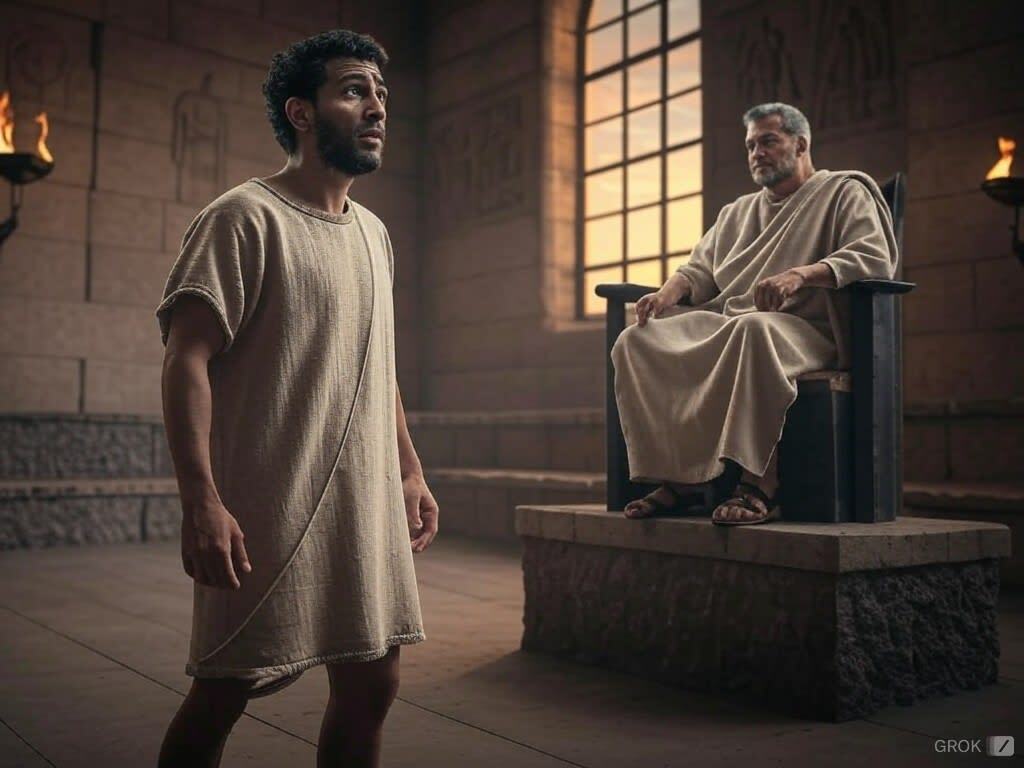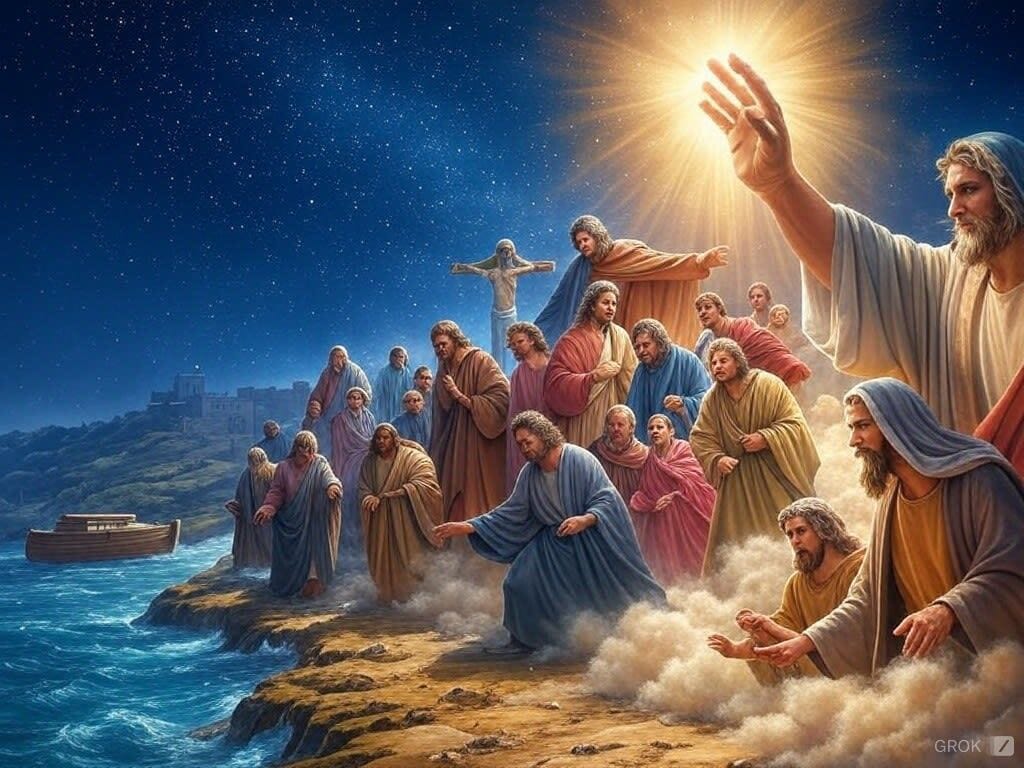
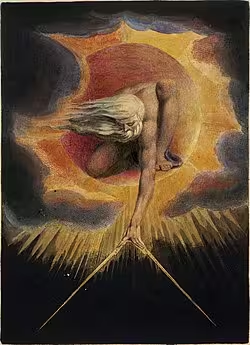
The account of Creation in the Bible is the foundational narrative of biblical theology, establishing the fundamental Creator-creature distinction that governs all subsequent scripture. In academic terms, this field of inquiry is known as cosmogony (the study of the origin and structural development of the universe). Far from serving as a mere passive historical record, the opening chapters of Genesis reveal the foundational attributes of God—His absolute power, His infinite wisdom, and His radical self-existence. Understanding how the cosmos was brought into being is essential to unlocking why humanity possesses volitional agency, why the physical world holds intrinsic value, and why the historic plan of salvation was initiated.
Divine Aseity: The Self-Existent Creator
Before the first element of matter was formed, God existed in perfect, uncaused fullness. In biblical scholarship, this intrinsic attribute is designated as Divine Aseity (derived from the Latin a se, meaning “from himself”).
This foundational concept encompasses three primary truths:
- Absolute Independence: God does not depend on the universe, human actors, or material resources for His existence, joy, fulfillment, or power. He is the ultimate Uncaused Cause, existing independently of time and space.
- Immutability of Character: Because God’s essence is eternally perfect, He does not undergo mutation or development. The sovereign, benevolent Character we encounter in Genesis 1 is identical to the relational God who initiates covenants throughout the rest of scripture.
- Omnipotence through Fiat: The recurring majestic phrase “And God said” demonstrates fiat creation—the effortless power to bring external objective reality into being through the sheer expression of His sovereign will.
The Philology of Creation: Bara vs. Asah
To accurately parse the biblical presentation of creation, a scholar must examine the specific linguistic mechanics of the Hebrew verbs used in the Masoretic Text. Biblical scholarship maintains a sharp, diagnostic distinction between two primary verbal roots:
1. Bārā (בָּרָא)
This verb is unique because throughout the entire Hebrew Bible, it exclusively takes God (Elohim) as its grammatical subject. Human agents are never the subject of a bara action. It signifies the initiation of something entirely new, epochal, and miraculous. It serves as the primary linguistic bedrock for the doctrine of Creatio Ex Nihilo (creation out of nothing), as it describes an production of form where no pre-existing material is mentioned.
2. ‘Āśāh (עָשָׂה)
In contrast, asah is a much broader, non-exclusive Semitic term meaning “to make,” “to fashion,” or “to manufacture.” It frequently involves a human or divine agent shaping, carving, or reorganizing pre-existing materials—much like a craftsman working with raw timber or clay.
The Scholarly Synthesis
By deliberately deploying bara in Genesis 1:1, the author asserts that God is not a mere demiurge or demi-god assembling the universe from found, chaotic items. He is the absolute Sovereign Originator. This linguistic choice underscores that God is fundamentally different in kind from the material world He brings forth.
Ancient Near Eastern Context: Genesis vs. Enuma Elish
The theological uniqueness of the biblical text becomes strikingly clear when contrasted with contemporary Ancient Near Eastern (ANE) cosmogonies, such as the Babylonian epic Enuma Elish.
Read as an intentional theological polemic, Genesis systematically dismantles the mythological assumptions of the ancient world across three main boundaries:
- Peaceful Decree vs. Cosmic Conflict: In Enuma Elish, the cosmos is formed out of the carcass of the slain dragon-goddess Tiamat following a violent, chaotic civil war among polytheistic deities. In Genesis, there is zero conflict, rival, or resistance; God brings forth structural order effortlessly through peaceful, authoritative verbal decree.
- Human Dignity vs. Divine Slavery: In the Babylonian mythic framework, humans are manufactured as an afterthought from the blood of the rebel god Kingu for the explicit purpose of being slaves to provide food offerings for the lazy deities. In the biblical narrative, humanity is the grand climax of the creation week, designated as the relational vice-regents of the King, endowed with intrinsic honor, authority, and dominion.
- Monotheistic Transcendance vs. Polytheistic Nature: ANE cultures routinely worshiped the sun, moon, and stars as potent, unpredictable divinities. Genesis delivers a brilliant theological critique by refusing even to name them, calling them simply “the greater light” and “the lesser light.” They are stripped of their mythological status and reclassified as mere functional cosmic timekeepers created by the one true God.
Creatio Ex Nihilo: Creation Out of Nothing
A central pillar of systematic biblical scholarship is Creatio Ex Nihilo. Unlike pagan cosmogonies where gods merely manipulate eternal, chaotic primeval matter, the Bible asserts that space, time, and matter had a definitive beginning point brought forth from non-existence by divine volition.
Why Ex Nihilo is Theologically Essential:
Vindicates the Goodness of Matter: In many ancient gnostic and philosophical systems, the physical world was viewed as inherently evil or defective because it was molded from corrupted, pre-existing matter. Genesis 1 explicitly corrects this by stating seven distinct times that the physical, material creation is “good” and ultimately “very good” (Genesis 1:31)—it is a flawless expression of God’s perfect creative intent.
Establishes Clear Teleology: If the universe was brought into being by an intelligent, sovereign choice rather than random cosmic shifts, it possesses an intrinsic teleology (a designed end, purpose, and destination). History is not cyclical or meaningless; it is moving toward a goal established by the Creator.
Affirms Total Sovereignty: If God had been forced to build the universe out of pre-existing matter, that matter would be co-eternal with Him, acting as a permanent limitation on His creative freedom. By creating ex nihilo, God maintains uncompromised, absolute authority over every single molecule in existence.
For a scholarly take on Ex Nihilo Creation read, “Does Genesis Really Teach a Recent, Literal, Seven-day Creation Week and a Global Flood?” by Richard M. Davidson at Andrews University.
Interpretive Frameworks for Creation in the Bible
A major area of ongoing scholarly inquiry involves mapping the structural design, literary genre, and chronological timeline of the six creation days (yom). Scholars have advanced three primary interpretive frameworks to understand the text:
1. The Literal 24-Hour View
This position asserts that the word yom must be understood in its plain, standard semantic sense as six consecutive, literal 24-hour solar days. Proponents emphasize the repeating textual marker “there was evening and there was morning” and point to the immediate manifestation of divine power as a direct sign of unmediated fiat creation.
2. The Day-Age Theory (Concordism)
This framework suggests that the word yom can semantically denote vast, extended epochs of time rather than standard 24-hour periods, pointing to biblical precedents where “day” represents an era (e.g., Psalm 90:4; 2 Peter 3:8). This approach seeks to harmonize the biblical narrative with modern geological timelines while preserving the chronological sequence of Genesis.
3. The Framework Hypothesis (Literary View)
This view interprets the six days not as a literal chronological timeline, but as an intentional, highly stylized literary structure. The text is organized into two symmetrical, parallel triads designed to show God systematically overcoming chaos by first Forming the Spaces (Days 1–3) and then Filling the Inhabitants (Days 4–6):
| Phase | Creation Day (Forming the Spaces) | Parallel Phase | Creation Day (Filling the Inhabitants) |
| Day 1 | Separation of Light from Darkness | Day 4 | Sun, Moon, and Stars (Rulers of Light/Dark) |
| Day 2 | Separation of the Sky from the Waters | Day 5 | Birds of the Air and Fish of the Sea |
| Day 3 | Appearance of Dry Land and Vegetation | Day 6 | Land Animals and Humanity (Imago Dei) |
| Day 7 | The Sabbath: Divine Rest, Royal Enthronement, and Sacred Communion |
The Two Accounts: Harmonizing Genesis 1 and Genesis 2
Skeptics and historical-critical scholars often point to the structural variations between the sweeping cosmic focus of Genesis 1:1–2:3 and the intimate, localized focus of Genesis 2:4–25 as a plain text contradiction. However, precise grammatical and narrative exegesis views these accounts as beautifully complementary perspectives.
[ Genesis 1: Universal Scope ] ---> Focuses on God as Elohim (Transcendence / Cosmic King)
  └───> [ Genesis 2: Localized Zoom-In ] ---> Focuses on God as Yahweh (Immanence / Personal Covenant)
This structural shift employs an intentional “Zoom-In” narrative technique:
- Genesis 1 (Elohim – The Transcendent Perspective): This account utilizes the name Elohim to depict the absolute transcendence, cosmic omnipotence, and universal sovereignty of God as He speaks galaxies into existence. It is the wide-angle lens of cosmogony.
- Genesis 2 (Yahweh – The Immanent Perspective): This account introduces the personal covenant name Yahweh (LORD) to depict the profound immanence, proximity, and relational tenderness of God. Here, He does not simply command from afar; He intimately fashions man from the dust of the ground, breathes the breath of life directly into his nostrils, plants a garden home, and establishes immediate moral and relational boundaries.
The Imago Dei: The Apex of Creation
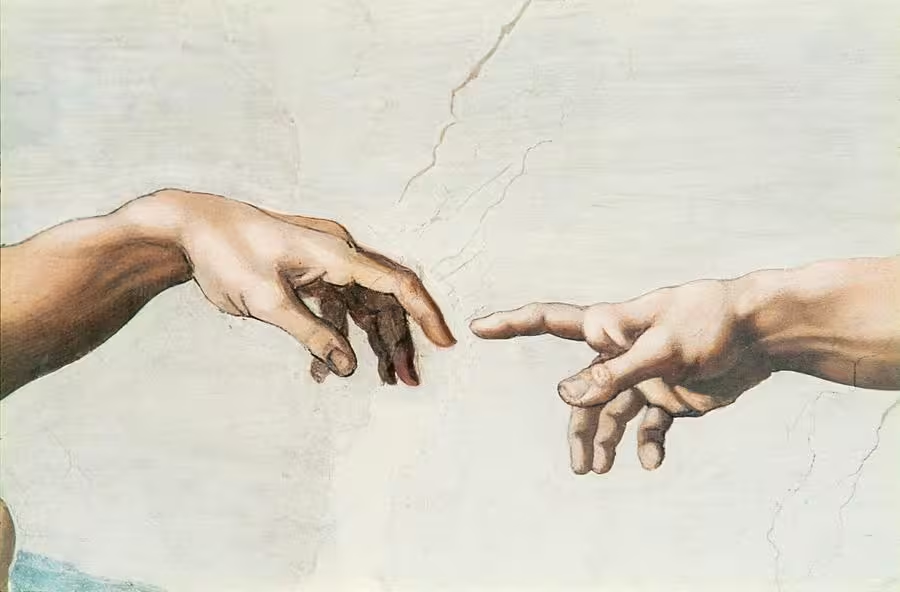
The entire creation narrative reaches its crescendo in the deliberate, counsel-led formation of humanity. The designation Imago Dei (the Image of God) fundamentally separates human beings from the rest of the biological order, elevating them above animals.
The Foundation of Human Volition
From a Provisionist theological perspective, the Imago Dei is intimately tied to the gift of libertarian free will. God did not design humanity as an array of mechanical puppets or biologically determined entities. True relationship requires genuine, uncoerced agency.
- Relational Capacity: The Imago Dei endows humanity with the spiritual capacity for authentic love, fellowship, and communion with the Creator and with one another. Love that is causally predetermined is a logical contradiction; therefore, authentic human response must be volitional.
- Moral Responsibility: Because human beings bear the functional image of the cosmic King, they operate as genuine moral agents. They are fully accountable for their actions. This reality shows that the historic Fall of Man was a genuine tragedy of misaligned human will, and demonstrates that the universal offer of divine grace must be personally and volitionally received.
Theological Anthropology: The Constitution of Man
Because humanity is uniquely positioned within the Imago Dei, human composition is distinct from all other living creatures. Understanding this structural anthropology is critical for tracing how the human agent interacts with divine grace:
- Dichotomy vs. Trichotomy: Scholars routinely debate whether human composition is best understood as bipartite (Body and Soul/Spirit as a unified immaterial whole) or tripartite (Body, Soul, and Spirit as distinct facets). Regardless of the specific framework, the immaterial component of man possesses a distinct spiritual capacity (Pneuma) that allows for direct communication with the divine.
- The Soul (Nephesh): In Hebrew thought, the nephesh represents the seat of vitality, personality, emotion, and volitional choice. It is the entire living being in action. It is through this receptive faculty that a person experiences the universal drawing of Prevenient Grace—the divine illumination that enables a fallen, yet structurally free agent to respond positively to the gospel call.
- The Purpose of Choice: Humanity was structurally engineered to find its ultimate rest, meaning, and flourishing in voluntary alignment with the Creator. This reality renders the Fall not as a natural step in evolution, but as a severe, tragic distortion of man’s original ontological design.
Theodicy and the Finite: Why the Fall Was Possible
A classic question within biblical scholarship asks: “If an absolutely perfect, omnipotent God brought forth a ‘very good’ creation, how was the entrance of moral evil and structural corruption even possible?”
The answer is found in the necessary conditions for authentic, relational love. For God to bring forth a creature capable of genuine, virtuous relationship, that creature had to possess the structural capacity for contrarian choice (the power to choose otherwise).
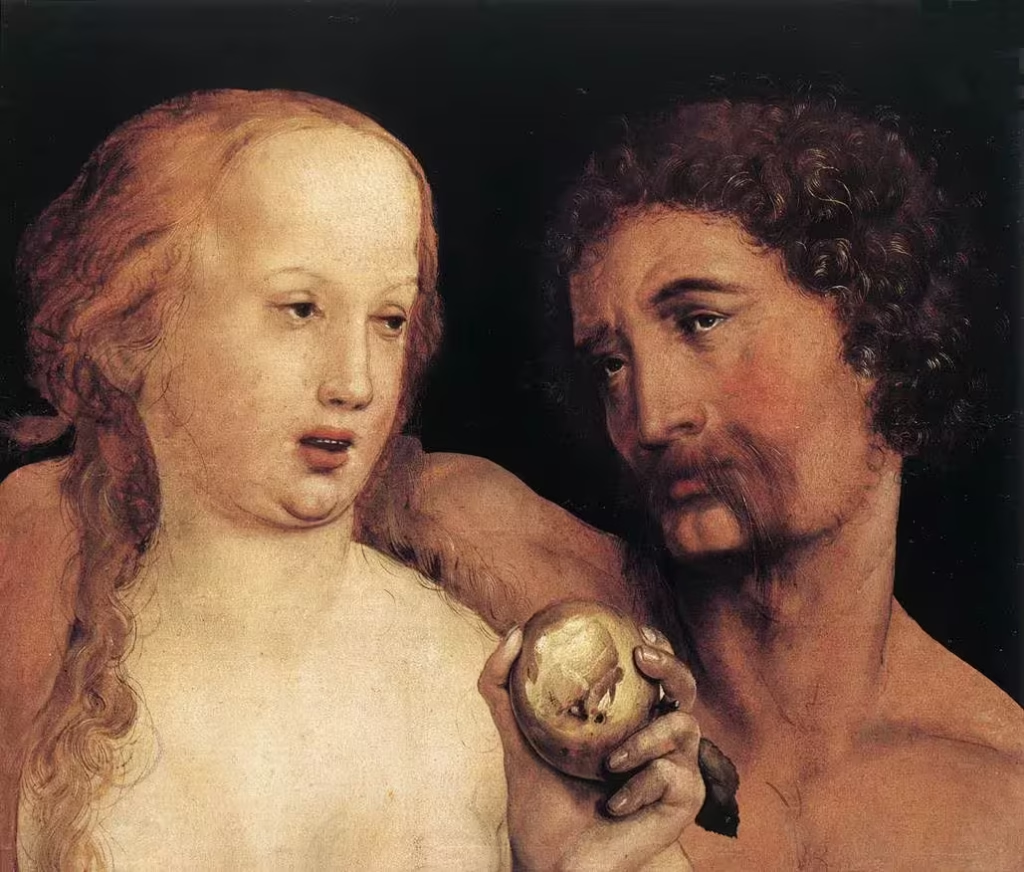
- The Tree of Knowledge as a Volitional Boundary: The presence of the Tree of the Knowledge of Good and Evil was not a hidden trap designed to cause failure. It was a structural necessity to make human freedom operational. Without a clear boundary marker where disobedience was possible, obedience would be a mechanical default rather than a meaningful, loving choice.
- The Necessity of Freedom: Without the genuine ability to say “No” to the Creator, humanity’s “Yes” would be completely devoid of moral or spiritual value. By endowing man with true volitional freedom, God preserves His own character as a loving, relational Father who desires genuine children, rather than an authoritarian ruler managing pre-programmed automatons.
General Revelation: The Witness of Nature
Biblical scholarship identifies two distinct avenues through which the Creator discloses Himself to humanity: Special Revelation (the written scriptures and the incarnate Christ) and General Revelation (the witness of creation itself).
- The Design Argument: As the Apostle Paul argues in Romans 1:20, God’s “eternal power and divine nature“ are not hidden; they are clearly perceived and intellectually understood through the structural design of the things that have been made. The cosmos acts as a permanent, visible monument to its Maker.
- The Non-Verbal Sermon: Psalm 19:1 declares that “The heavens declare the glory of God, and the sky above proclaims his handiwork.” The intricate order, beauty, and mathematical predictability of the universe function as an ongoing, non-verbal sermon preached universally to every human being on earth, leaving humanity without excuse.
- Prevenient Grace through the Cosmos: This pervasive witness of nature serves as an initial form of illumination—a “first light” of prevenient grace. It alerts the human conscience to the reality of a sovereign Creator, prompting the seeking heart to long for the “greater light” found exclusively in the gospel of Jesus Christ.
The Sabbath: The Final Act of Creation in the Bible
The creation narrative does not reach its true structural completion with the manufacturing of man on the sixth day, but with the institution of the Sabbath on the seventh day. In Hebrew scholarship, the Sabbath (Shabbat) is understood as the Crown of Creation.
- Covenantal Rest over Endless Labor: The Sabbath demonstrates that the universe was not constructed merely to be a functional factory for human production and labor. It was designed to be a cosmic temple where humanity rests alongside God, prioritizing worship, relational communion, and sacred rest over material output.
- The Sign of Divine Enthronement: By entering into rest, God visually demonstrates that His creative work is perfectly completed, structured, and sufficient; nothing needs to be added. In the Ancient Near Eastern world, a king rested only when his palace or temple was finished and his sovereign rule was securely established. The Sabbath is the celebration of God’s royal enthronement over an orderly cosmos.
Conclusion: The Goodness of the Creator
The rigorous study of Creation in the Bible confirms that humanity is not an accidental byproduct of mindless time, matter, and blind chance. We are the intentional, volitional handiwork of a self-existent, benevolent God who originally established the entire cosmos in a state of perfect Shalom—complete structural peace, harmony, and wholeness.
While the historic entrance of human sin fractured this original design, the residual beauty, complexity, and order of the created universe still clearly whisper of the Creator’s underlying glory, reminding us of His sovereign character and His definitive plan to ultimately make all things new.