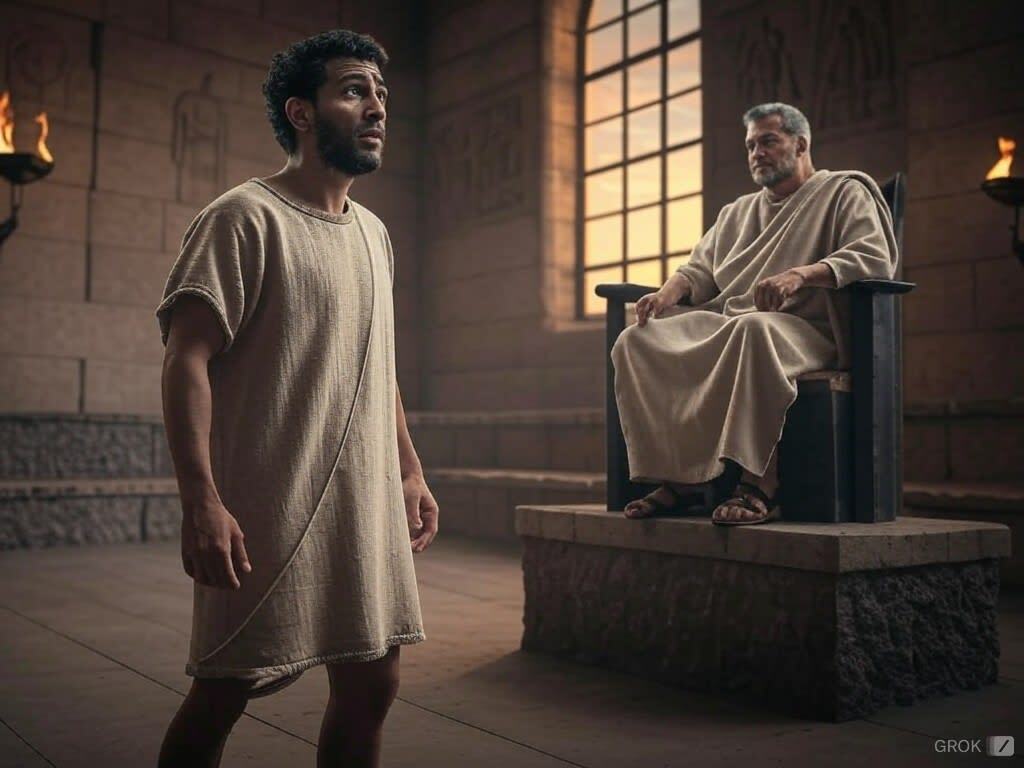

The biblical definition of self-control is a complex pneumatic faculty that governs the intersection of human desire and divine order. Far from the modern psychological concept of “willpower”—which implies an autonomous, self-reliant struggle against one’s own nature—the Scriptures present self-control as a technical fruit of the Spirit that restores the internal, holistic hierarchy of the human person.
Within the broader framework of Christian theology, self-control functions as the internal sovereignty of the spirit over physical, emotional, and psychological impulses. By recovering the philological depth of the original biblical languages, we can understand self-control as the essential “governor” of the soul. It ensures that the legitimate, structural appetites of the body do not degenerate into destructive categories of vice.
The Philology of Mastery: Recovering Enkrateia and Sophrosyne
To grasp the technical biblical definition of self-control, a student must move beyond vernacular English translations and evaluate the specific semantic ranges of the Hebrew and Greek terms deployed across biblical history.
1. Enkrateia (ἐγκράτεια) — Power From Within
The primary term used in Paul’s theological catalog in Galatians 5:22–23 is enkrateia. This is a compound word formed from the preposition en (in/within) and the root kratos (power, dominion, or sovereign strength).
- The Technical Distinction: Unlike secular “restraint,” which implies an external force holding back an impulse, enkrateia denotes internal “sovereignty over oneself.” It describes a person who exercises dominion over their own passions because they have been fundamentally empowered from within.
- The Source of Power: Biblical scholarship emphasizes that this attribute is categorized as a “fruit,” not a “work.” It represents an organic outworking of the indwelling Holy Spirit, completely distinguishing biblical virtue from the Stoic concept of autarkeia (self-sufficiency), which relied entirely on the autonomous human intellect.
2. Sophrosyne (σωφροσύνη) — The Sanity of the Soul
While enkrateia provides the dynamic power to execute control, sophrosyne (frequently translated as “sound-mindedness,” “sobriety,” or “discretion”) provides the wisdom that guides that power.
- The Logic of Balance: In the New Testament epistles (such as 2 Timothy 1:7), this state of mind reflects a cognitive clarity unclouded by disordered passions. In the classical Greek philosophical tradition, this was depicted as the charioteer guiding wild horses; in biblical theology, it is the mind of Christ bringing the physical faculties into subjection.
3. Mashal (מָשַׁל) — The Old Testament Framework
In the Hebrew Scriptures, self-control is often framed through the verb mashal, which means “to rule,” “to have dominion,” or “to govern.”
- The Wisdom Context: Proverbs 16:32 declares, “He who rules his spirit (moshél berucho) is better than he who takes a city.” The Old Testament anchors self-control not as physical asceticism, but as a form of spiritual warfare where governing one’s internal territory requires greater strength than conquering an external fortress.
The Technical Anatomy of Self-Control
Self-control functions as a structural safeguard within the human economy, maintaining the creator-creature distinction within individual behavior.
1. The Governance of Tripartite Human Anthropology
Biblical anthropology splits the human architecture into a specific hierarchy consisting of Spirit, Soul, and Body (1 Thessalonians 5:23):
- Spirit over Soul: The human spirit, illuminated by divine revelation and the Holy Spirit, informs the soul (the seat of the will, intellect, and emotions).
- Soul over Body: The soul, in turn, properly directs the physical members of the body.
- The Fragmentation of Vice: Spiritual fragmentation occurs when this hierarchy is inverted—when the sensory cravings of the body dictate the soul’s choices, blinding the spirit. Self-control is the technical resetting of this internal order.
2. The Mechanics of the “Internal Governor”
In the study of hamartiology, prevalent vices such as gluttony and lust are defined as “disordered appetites.” These represent legitimate human hungers (for sustenance or covenantal intimacy) that have overstepped their borders.
- The Firewall: Self-control acts as an internal governor. It does not seek to eradicate or destroy the physical appetite—which would fall into the historical heresy of Gnostic asceticism—but to maintain it within its design.
- Somatic Homeostasis: When the governance of the body is absent, the human system enters a state of perpetual agitation. Biblical self-control provides an emotional and spiritual homeostasis, allowing the individual to operate in freedom rather than the narrow loops of behavioral addiction.

Historical Context: Biblical Enkrateia vs. Classical Philosophy
The early church did not develop its theology of self-control in a cultural vacuum; its writers explicitly countered the dominant philosophical models of the Greco-Roman world.
1. The Critique of Stoic Apatheia
Stoic philosophy heavily prioritized apatheia—the total eradication of emotion, viewing passions as intellectual diseases.
- The Redirection: New Testament scholarship highlights that biblical enkrateia is not emotional detachment, but emotional redirection. The believer is not called to be a passive, unfeeling observer, but to have their active emotions regulated by grace. The heart is not killed; it is guarded through self-mastery.
2. Aristotelian Akrasia vs. Spiritual Regeneration
In his Nicomachean Ethics, Aristotle explored the problem of akrasia (incontinence, or acting against one’s best judgment due to the raw pull of pleasure). He argued that systematic education and habituation were the ultimate remedies.
- The Power Source: While habituation is structurally useful, the biblical framework argues that the ultimate solution to akrasia is the regeneration of the spirit. Human instruction cannot fix a broken willpower; it requires a transformative power source.
Thematic Mesh: The Structural Antidote to Capital Vices
As a central component of systematic theology, self-control serves as the specific, technical solution to the systemic damage caused by the Fall.
                    [ Holy Spirit (Source) ]
                               │
                               ▼
                    [ Fruit of Enkrateia ]
                               │
         ┌─────────────────────┼─────────────────────┐
         ▼                     ▼                     ▼
[ Antidote to Lust ]  [ Antidote to Wrath ] [ Antidote to Greed ]
 (Body Sanctified)     (Soul Moderated)      (Eyes Disciplined)
1. The Boundary for Lust and Gluttony
If disordered appetites act as the fuel for physical vice, self-control is the structural firewall. It prevents a temporal physical need from transforming into a consuming idol. By practicing enkrateia, the believer maintains the “sanctification of the vessel” (1 Thessalonians 4:4), preserving the body as a temple.
Scholar’s Note: Radical Deterrents and Historical Context
In the Olivet Discourse, Jesus deploys intense, hyperbolic language to describe the preservation of self-control: “If your right eye causes you to sin, tear it out and throw it away…” (Matthew 5:29).
While modern commentators recognize this as a striking Semitic hyperbole emphasizing moral boundaries, sections of the early church wrestled with its literal application. For a comprehensive historical analysis of how early Christian ascetics navigated these boundary markers, read Daniel F. Caner’s foundational study, “The Practice and Prohibition of Self-Castration in Early Christianity“ (Church History, Vol. 66).
2. The Regulation of Wrath and Envy
While self-control is commonly associated with physical urges, it is equally vital for internal somatic responses.
- Cooling the Spirit: The biblical description of wrath (thumos) denotes an internal boiling of the soul. Self-control is the capacity to cool this thermal spike, actively transferring the natural desire for justice over to God (Romans 12:19).
- Restricting the Eye: In countering envy, self-control acts as a discipline of the eyes—refusing to let the sight of another’s advancement poison internal peace.
The Kenotic Pattern: Christ as the Archetype of Control
The ultimate expression of the biblical definition of self-control is revealed in the Kenosis (self-emptying) of Jesus Christ.
1. The Wilderness Temptation (Matthew 4:1–11)
In the Judean wilderness, Jesus demonstrated perfect enkrateia. Following a forty-day fast, He refused to let extreme physical hunger override His vocational calling. He did not turn stones into bread, because His sustenance was structurally anchored in the will of the Father, proving that physical demands must submit to divine attributes.
2. The Gethsemane Pivot (Luke 22:39–46)
In the Garden of Gethsemane, the somatic distress of Christ reached its historical peak, resulting in hematidrosis (sweating drops of blood). Yet, His prayer—“Not My will, but Yours be done”—stands as the most profound act of enkrateia in history. It represents the human will perfectly governed by and aligned with the divine will under intense pressure.
Technical Summary: The Sovereign Spirit
In conclusion, the biblical definition of self-control describes a soul restored to its proper created hierarchy. It is a masterpiece of grace, where the regenerative power of God meets the active response of the human heart. By anchoring behavior in the permanent character of God, the individual moves beyond the temporary willpower of the flesh into the enduring sovereignty of the Spirit.
FAQ: Scholarly Questions on Biblical Self-Control
What is the biblical definition of self-control?
he biblical definition of self-control (enkrateia) is the internal sovereignty of the human spirit, empowered by the Holy Spirit, over physical, emotional, and psychological impulses. It is a spiritual fruit that restores correct order to the human person.
How does biblical self-control differ from willpower?
Willpower relies on autonomous human effort and the intellect to restrain desires, often resulting in internal tension. Biblical self-control is an organic fruit of the Holy Spirit that regenerates the desires of the heart, aligning them with divine order.
Where is self-control mentioned in the Bible?
Self-control is prominently listed as the final component of the Fruit of the Spirit in Galatians 5:22-23. It is also highlighted as an essential virtue for Christian maturity in 2 Peter 1:6 and 2 Timothy 1:7.
What is the Greek word for self-control in the Bible?
The primary Greek word is enkrateia (ἐγκράטεια), which signifies “mastery” or “power within.” A secondary related term used is sophrosyne (σωφροσύνη), meaning “sound-mindedness” or “sobriety of soul.”