
To understand the biblical definition of gluttony is to explore the intersection of anthropology, hamartiology, and the theology of the body, recognizing that what we do with our physical appetites reflects our deepest spiritual allegiances. Gluttony is frequently reduced in the modern imagination to a simple matter of overeating or a lack of dietary discipline, yet the biblical definition of gluttony encompasses a much deeper disorder of the human soul and its relationship to the material world.
In the landscape of systematic theology and the history of the seven deadly sins, gluttony (gula) represents a profound misdirection of desire, where the creature seeks to find ultimate satisfaction in the gift rather than the Giver. While contemporary culture oscillates between obsessive dieting and unrestrained indulgence, the biblical witness offers a more technical and holistic framework, viewing the consumption of food and drink as a covenantal act that either honors the Creator or serves the idol of the belly. This article provides an exhaustive analysis of the linguistic bedrock, theological mechanics, and redemptive implications of this often overlooked vice.
Linguistic Bedrock: The Philology of Appetite and Excess
A rigorous examination of the biblical definition of gluttony must begin with the original languages of Scripture. The Hebrew and Greek terms used to describe the gluttonous person reveal a semantic range that includes laziness, rebellion, and a specific type of moral worthlessness.
Hebrew Terminology (Old Testament)
The Old Testament vocabulary for gluttony often links the vice to social rebellion and a lack of self-government.
- Zalāl (זָלַל): This is the primary Hebrew root associated with gluttony. Etymologically, it carries the sense of “shaking out,” “devaluing,” or “being light.” In Proverbs 23:20–21, it refers to those who are “profligate” or “riotous eaters of flesh.” The glutton is one who treats the precious gifts of God’s provision as cheap or common, essentially “shaking out” the value of the covenantal meal.
- Sābā (סָבָא): Often used in conjunction with zalāl, this term refers to “drinking to excess” or “imbibing.” Together, the zolel and the sobe (the glutton and the drunkard) represent the pinnacle of communal irresponsibility. In Deuteronomy 21:20, these terms are used by parents to describe a “stubborn and rebellious son,” indicating that gluttony was viewed as a symptom of a deeper rejection of authority and covenantal order.
Greek Terminology (New Testament)
The New Testament terminology shifts slightly to emphasize the belly as a rival deity and the loss of self-control.
- Gaster (γαστήρ): While literally meaning “stomach” or “belly,” it is used metaphorically in Titus 1:12 to describe the “lazy gluttons” (gasteres argai) of Crete. Here, the belly is not just an organ but the seat of the entire personality, where the person is defined entirely by their digestive appetites.
- Phagein (φαγεῖν): In the descriptions of the “son of man” being falsely accused as a “glutton and a drunkard” (Matthew 11:19), the term phagos is used. This refers to a “devourer.” The accusation against Christ was that He participated in the riotous consumption associated with the rebellious son of Deuteronomy 21.
- Koilia (κοιλία): Similar to gaster, Paul uses koilia in Romans 16:18 and Philippians 3:19 to describe those whose “god is their belly.” This represents the technical theological endpoint of gluttony: the replacement of the Creator with the sensations of the digestive tract.
Technical Framework: The Theological Mechanics of Consumption
The biblical definition of gluttony functions through a specific set of theological mechanics involving the corruption of the imago Dei, the onset of spiritual alienation, and the breach of the covenant.
The Belly as an Idol
Theologically, gluttony is not about the quantity of food alone but the quality of the soul’s orientation. Thomas Aquinas famously noted that gluttony can occur in five ways: seeking food that is too sumptuous, too dainty, too much, too eagerly, or too daintily prepared. The mechanic at work here is the “displacement of desire.” When the appetite for the material gift exceeds the appetite for the Divine Giver, the belly becomes a rival god. This is a form of internal idolatry where the physical sensation of fullness replaces the spiritual reality of being filled by the Spirit.
The biblical definition of gluttony is not merely an isolated individual failure but can manifest as a broader societal distortion of the creative order. As Peter Browning argues in “The Global Obesity Epidemic“, shifting the ethical focus from individual willpower to the systemic influences of the food industry allows for a more comprehensive understanding of how gluttonous structures affect the common good. For the Christian researcher, this highlights the necessity of viewing consumption not just through the lens of personal temperance, but as a covenantal responsibility to resist industrial forces that exploit human appetite for profit.
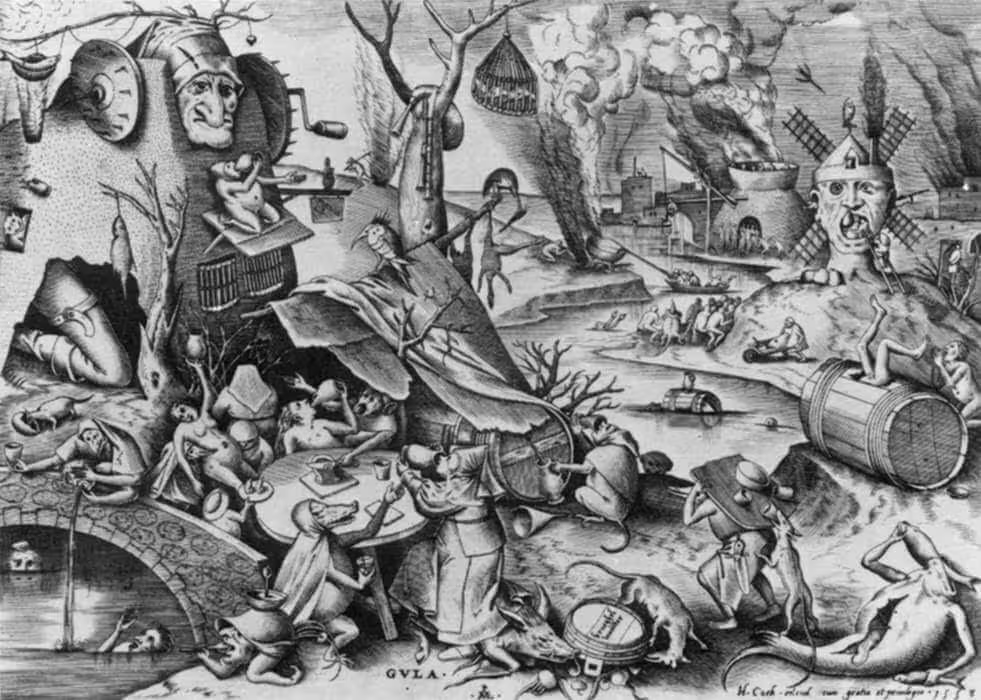
While Bruegel’s Gula (pictured above) focuses on the grotesque physical deformity caused by individual excess, modern theological ethics invites us to see how these same distorted appetites have been scaled into global industrial systems.
Sin, Death, and Bodily Alienation
Gluttony is a “capital vice” because it tethers the soul to the earth through the weight of the flesh. In the biblical framework, the body is a temple of the Holy Spirit (1 Corinthians 6:19). Gluttony desecrates this temple by treating the body as a mere furnace for fuel rather than an instrument of worship. This leads to a state of “bodily alienation” where the person is no longer the master of their physical impulses but a slave to them.
As Proverbs 23:2 noted, the danger of the gluttonous appetite is so great that it is better to “put a knife to your throat” than to be mastered by it. This language of “death” (the knife) highlights that unrestrained appetite is a path toward spiritual and physical dissolution.
Historical Context: ANE and Second Temple Perspectives
The biblical understanding of gluttony was forged in a world where food scarcity was a constant threat, making the vice even more socially and theologically offensive.
Ancient Near Eastern (ANE) Context
In the ANE, the king was often depicted as the one who provided a “bountiful table” for his subjects. For a subject to be a glutton was not just a personal failing; it was a waste of the king’s resources. Furthermore, in many pagan cults, gluttonous feasting was a part of the ritual worship of fertility deities. The biblical prohibition against gluttony served to distinguish the people of Israel, whose table was to be governed by the laws of holiness (kashrut) and the ethics of the Sabbath, rather than the unrestrained excess of the surrounding nations.
First-Century Jewish Background
By the Second Temple period, Jewish wisdom literature had further refined the critique of gluttony. Ben Sira warns that “overeating brings sickness, and gluttony leads to nausea” (Sirach 37:30). In the 1st-century context, the “common table” was a primary site of fellowship and religious identity. To be a glutton was to disrupt the harmony of the table, taking more than one’s share and thus depriving the poor. This is why the accusation against Jesus was so severe; it was an attempt to categorize Him as a social and religious outcast.
Thematic Mesh: From the Garden to the Marriage Supper
The biblical definition of gluttony serves as a critical link in the “thematic mesh” of redemptive history, connecting the First Adam to the Last Adam.
Adam and the Original Gluttony
While the Fall is often framed as an act of pride, it was fundamentally an act of illicit consumption. Adam and Eve were given a world of abundance but were forbidden one specific food. Their sin was a refusal to observe the “fast” commanded by God. They preferred the taste of the fruit to the word of the Creator. In this sense, the first sin had a gluttonous dimension: the elevation of the appetite over the divine mandate.
Christ: The Fasting King
In stark contrast, the Last Adam began His public ministry by fasting for forty days (Matthew 4:2). Where Adam failed in a garden of plenty, Christ triumphed in a wilderness of scarcity. His response to the temptation to turn stones into bread—”Man shall not live by bread alone, but by every word that comes from the mouth of God”—is the definitive theological refutation of gluttony. Christ restores the hierarchy of desire, placing the Word of God above physical sustenance.
Technical Comparison of Spiritual Appetites
To assist researchers in distinguishing between healthy enjoyment and gluttonous excess, the following table outlines the technical features of consumption.
| Feature | Covenantal Consumption | Gluttonous Consumption (The Vice) |
| Primary Goal | Sustenance and Fellowship | Gratification and Self-Indulgence |
| Focus | The Giver (God) | The Gift (Food/Drink) |
| Social Result | Sharing and Hospitality | Greed and Deprivation of Others |
| Spiritual State | Self-Control (Enkrateia) | Slavery to Appetite (Gaster) |
| Biblical Motif | The Passover / The Eucharist | The Rebellious Son / Phil. 3:19 |
| End Point | Gratitude and Strength | Dullness of Heart and Decay |
Gluttony and the Covenantal Table
The biblical definition of gluttony must also be understood within the context of Covenant Theology. In both the Old and New Covenants, the communal meal is a sign of peace and reconciliation. The Passover, the Peace Offerings, and the Lord’s Supper are all technical acts of eating that signify a relationship with God.
Gluttony breaks this covenantal sign. If the meal is intended to show our dependence on God and our love for our neighbor, the glutton turns the meal inward. By consuming without regard for the sacredness of the occasion or the needs of the community, the glutton treats the covenantal sign as a common commodity. This is why Paul warns the Corinthians about their behavior at the Lord’s Table (1 Corinthians 11:20–22); by eating and drinking to excess while others go hungry, they were “despising the church of God” and eating judgment upon themselves.
Summary: The Discipline of the Table
In conclusion, the biblical definition of gluttony is far more than a dietary concern; it is a spiritual diagnostic. It reveals where we look for our “daily bread” and whether we trust in the providence of God or the power of our own consumption. By returning to the philological roots of zalāl and gaster, we see that the remedy for gluttony is not just dieting, but a reorientation of the heart through the grace of Christ.
The Last Adam provides the true “bread of life,” satisfying the hunger that physical food can never touch. For the pastor and the student, addressing gluttony is an invitation to rediscover the table as a place of worship, where every bite is taken in gratitude and every meal is a foretaste of the great Marriage Supper of the Lamb.